
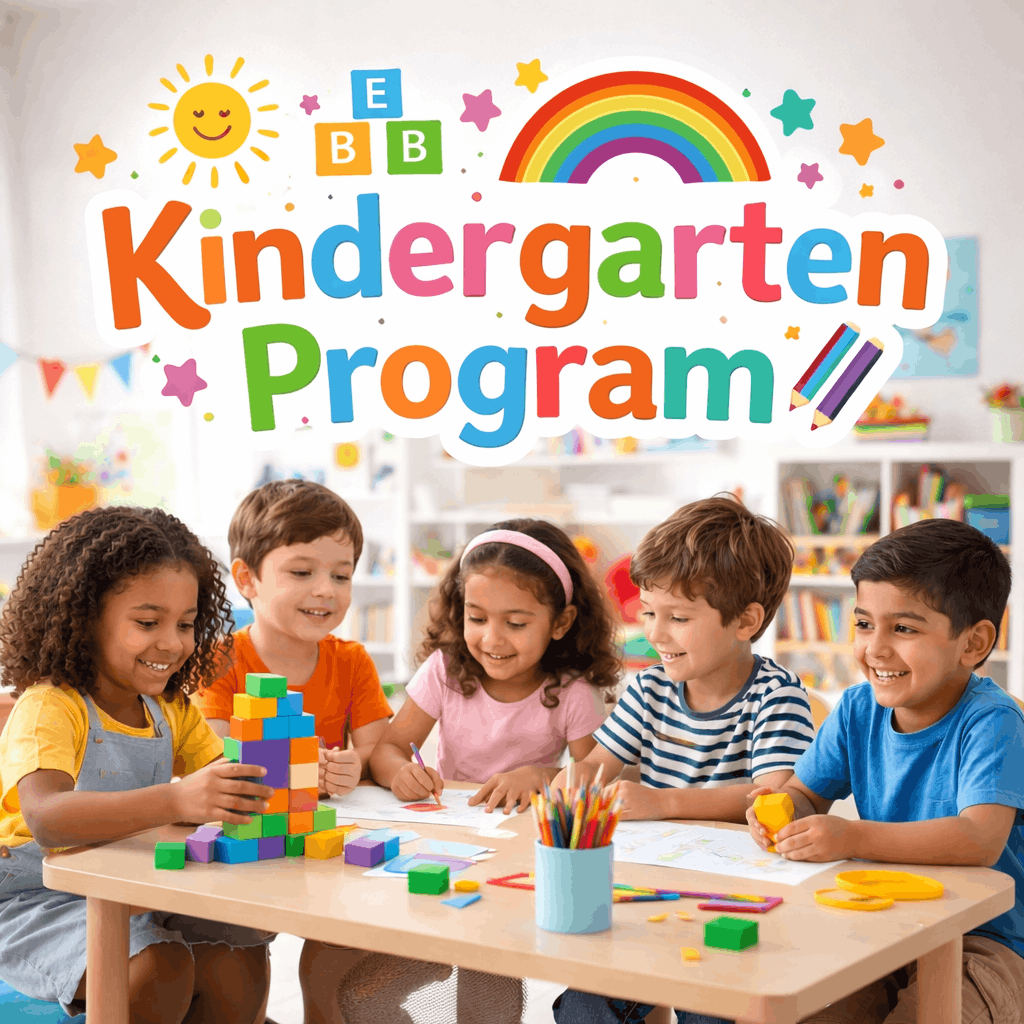
Early childhood education is not “preparation for real learning.” According to neuroscience, psychology, and global education research, the first six years of life are real learning—and they shape everything that follows. For families and educators in Egypt, understanding what happens in a child’s brain between birth and age six is essential. This period determines not only school readiness, but also future academic performance, emotional regulation, behavior, motivation, and lifelong learning capacity. This article explains the science behind early childhood education, clears up common misconceptions, and shows how evidence-based early learning practices can directly improve outcomes in Egyptian schools —whether national, semi-international, or international pathways.
1. Why the First 6 Years Are Scientifically Critical Rapid Brain Development (The Numbers Matter) By age 5:
A child’s brain reaches about 90% of its adult size
Over one million neural connections per second are formed in early childhood
Brain circuits responsible for language, attention, memory, and emotional control are rapidly built
Neuroscience shows that the brain is most plastic (changeable) in these early years. Experiences during this window have a stronger and longer-lasting impact than experiences later in life. Key implication: What children experience in preschool and kindergarten is not “temporary”—it becomes the foundation for how they learn forever.
2. Early Childhood Education and Cognitive Development How Young Children Actually Learn Children under six learn primarily through:
Sensory input (seeing, touching, hearing)
Play and exploration
Social interaction
Language exposure
Repetition in meaningful contexts
Unlike older students, young children cannot learn effectively through passive instruction (long explanations, memorization, worksheets). Core Cognitive Skills Built Before Age 6 Early childhood education directly develops:
Language and vocabulary
Working memory
Attention control
Problem-solving
Early numeracy and logical thinking
Executive functions (planning, self-control)
Research consistently shows that children who receive high-quality early education demonstrate:
Faster reading acquisition
Stronger math understanding
Better classroom behavior
Higher academic achievement in later grades
3. Language Development: A Window That Does Not Fully Reopen Why Early Language Exposure Is Critical The brain areas responsible for language are especially sensitive between ages 0–6. During this period:
Children acquire sounds, grammar, and sentence structures naturally
Bilingual or multilingual exposure is processed efficiently
Vocabulary growth accelerates when language is rich and interactive
For Egypt, this is particularly important because many students:
Learn Arabic and English simultaneously
Transition later into international curricula (IGCSE, IB, American)
Children who develop strong language foundations early:
Read more fluently
Understand instructions better
Express ideas clearly
Perform better across all subjects
Early language gaps, if not addressed, often widen over time.
4. Social and Emotional Development: The Hidden Academic Factor Learning Is Emotional Before It Is Academic Neuroscience confirms that emotion and cognition are deeply connected. Young children learn best when they feel:
Safe
Supported
Valued
Emotionally regulated
Early childhood education shapes:
Self-confidence
Emotional regulation
Empathy
Cooperation
Response to stress and frustration
These skills directly affect:
Classroom behavior
Attention span
Willingness to try difficult tasks
Long-term motivation to learn
In Egyptian classrooms, where class sizes may vary and academic expectations can be high, strong emotional foundations protect children from anxiety and disengagement later.
5. The Role of Play: Not a Luxury—A Necessity The Science of Play-Based Learning Play is not “free time.” It is a biologically essential learning mechanism in early childhood. Through structured and guided play, children develop:
Problem-solving skills
Creativity
Language use in context
Social negotiation
Self-regulation
Research shows that play-based learning:
Strengthens neural networks
Improves attention and memory
Enhances executive functions
Supports deeper conceptual understanding
High-quality early education blends:
Purposeful play
Guided discovery
Age-appropriate academic exposure
This balance is especially important in Egypt, where some early programs mistakenly push formal academics too early.
6. Early Education and Long-Term Academic Outcomes What Longitudinal Studies Show Decades of international research confirm that children who attend high-quality early childhood programs are more likely to:
Perform better in primary and preparatory stages
Repeat grades less often
Show stronger literacy and numeracy skills
Graduate from secondary education
Succeed in higher education
Importantly, benefits are strongest when early education focuses on:
Quality interactions (not just content)
Trained educators
Developmentally appropriate practices
The return on investment in early childhood education is higher than any other stage of education.
7. Early Childhood Education in the Egyptian Context Key Challenges In Egypt, early childhood education can face:
Uneven quality between schools
Overemphasis on early memorization
Limited understanding of child development science
Pressure from parents for “academic results” too early
Evidence-Based Solutions Schools that succeed in the Egyptian context typically:
Blend national identity with global best practices
Emphasize language, play, and social skills in early years
Train teachers in child development and classroom interaction
Engage parents as partners in learning
Early education should not copy upper grades—it should prepare children neurologically, emotionally, and cognitively for future success.
8. What Parents Should Look for in Early Childhood Programs Parents choosing a preschool or kindergarten should ask:
How does the program support language development?
Is learning play-based and interactive?
How are emotional and social skills nurtured?
Are teachers trained in early childhood education?
Is the environment safe, structured, and stimulating?
The goal is not early exams—it is strong foundations.
9. Early Childhood Education and Lifelong Learning The habits formed in the first six years shape:
Curiosity vs. fear of learning
Persistence vs. avoidance
Confidence vs. anxiety
Love of reading vs. resistance
Children who experience positive, developmentally appropriate early education are more likely to become:
Independent learners
Critical thinkers
Emotionally balanced students
Adaptable adults in a changing world
This is the essence of lifelong learning.
Conclusion: The First 6 Years Are Not Optional Science is clear: Early childhood education is not a preparatory stage—it is the foundation of all future learning. For Egypt’s education system, investing in high-quality early education is one of the most powerful ways to:
Improve academic outcomes
Reduce learning gaps
Support student well-being
Prepare future generations for local and global success
When the first six years are done right, everything that follows becomes easier, stronger, and more meaningful.