
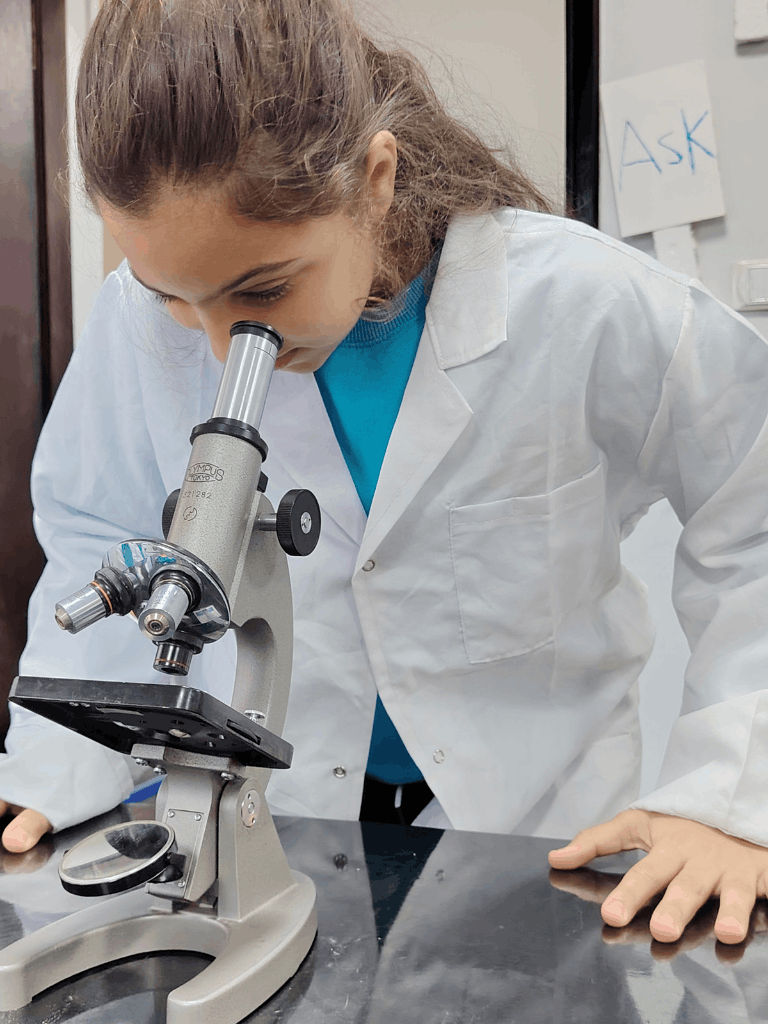
In today’s rapidly changing world, success is no longer defined by memorization or exam scores alone. Modern education systems—globally and in Egypt—are increasingly focused on developing critical thinking, problem-solving, creativity, and adaptability. One of the most powerful educational approaches supporting these skills is STEAM education. STEAM— Science, Technology, Engineering, Arts, and Mathematics —is not simply a collection of subjects. It is a way of learning and thinking that mirrors how real-world problems are solved. This article explores the research-based role of STEAM education in developing critical thinking, with a specific focus on how it can transform learning outcomes within the Egyptian education system.
1. What Is STEAM Education? STEAM education integrates:
Science – inquiry, evidence, and experimentation
Technology – digital tools, systems, and innovation
Engineering – design, building, testing, and iteration
Arts – creativity, design thinking, expression, and perspective
Mathematics – logic, patterns, modeling, and precision
Unlike traditional subject-isolated teaching, STEAM emphasizes:
Interdisciplinary learning
Real-world problem solving
Project-based and inquiry-driven instruction
Collaboration and reflection
STEAM shifts education from “What do students know?” to “How do students think?”
2. Why Critical Thinking Is a Priority in Education What Is Critical Thinking? Critical thinking involves the ability to:
Analyze information
Evaluate evidence
Identify patterns and relationships
Question assumptions
Solve unfamiliar problems
Make reasoned decisions
Educational research consistently links critical thinking to:
Higher academic achievement
Better problem-solving skills
Improved adaptability in higher education and careers
In Egypt, where many students are historically trained in rote memorization, developing critical thinking is essential for preparing learners for:
International curricula (IGCSE, IB, American)
University research and analysis
Modern labor market demands
3. The Science Behind STEAM and Critical Thinking Cognitive and Educational Research Findings Research in cognitive science and education shows that critical thinking develops when learners:
Engage with complex, open-ended problems
Apply knowledge across contexts
Reflect on their reasoning
Learn through trial, error, and revision
STEAM environments naturally promote these conditions. Studies demonstrate that students engaged in STEAM-based instruction show:
Improved analytical reasoning
Stronger problem-solving strategies
Greater conceptual understanding
Enhanced creativity and innovation
STEAM activates multiple cognitive systems simultaneously—logical, spatial, linguistic, and creative—leading to deeper learning.
4. How STEAM Develops Critical Thinking Skills 1. Inquiry-Based Learning Encourages Questioning STEAM learning starts with questions, not answers:
Why does this happen?
How can we improve it?
What if we change this variable?
This inquiry approach:
Trains students to ask meaningful questions
Develops hypothesis-building skills
Encourages evidence-based reasoning
In Egyptian classrooms, this represents a powerful shift from teacher-centered instruction to student-driven exploration.
2. Problem-Solving Through Real-World Challenges STEAM projects often address real-life problems such as:
Environmental sustainability
Energy efficiency
Urban planning
Health and safety
Technological innovation
Students must:
Analyze the problem
Design solutions
Test outcomes
Revise their work
This iterative process is at the heart of critical thinking and mirrors professional scientific and engineering practices.
3. Engineering Design Builds Logical Reasoning Engineering tasks require students to:
Define constraints
Plan systematically
Apply mathematical reasoning
Evaluate failures constructively
Failure is treated as data, not weakness. This mindset:
Builds resilience
Strengthens analytical thinking
Encourages persistence
For Egyptian students accustomed to high-stakes grading, this approach helps shift focus from fear of mistakes to learning through process.
4. The Arts Enhance Creativity and Cognitive Flexibility The inclusion of Arts in STEAM is not decorative—it is cognitive. Arts education supports:
Divergent thinking
Visual reasoning
Creative problem framing
Communication and presentation skills
Research shows that creativity and critical thinking are deeply interconnected. Students who can imagine multiple solutions are better critical thinkers. In Egypt’s cultural context, arts integration also:
Strengthens cultural identity
Encourages expression
Balances academic pressure
5. Collaboration Develops Metacognition STEAM projects often involve teamwork, where students must:
Explain their thinking
Defend ideas with evidence
Listen to alternative viewpoints
Negotiate solutions
This social interaction builds metacognitive awareness —thinking about one’s own thinking—which is a core component of critical thinking.
5. STEAM vs. Traditional Teaching Approaches
Traditional Approach STEAM Approach
Memorization Understanding and application
Single correct answer Multiple possible solutions
Teacher-centered Student-centered
Isolated subjects Integrated disciplines
Grades as motivation Curiosity and mastery
Research indicates that while traditional methods may produce short-term exam success, STEAM approaches support long-term cognitive development.
6. STEAM Education in the Egyptian Context Current Challenges Egyptian education faces several structural challenges:
Overcrowded curricula
Exam-centric assessment
Limited interdisciplinary teaching
Parent pressure for grades
These challenges can restrict opportunities for critical thinking development.
Why STEAM Is Especially Relevant for Egypt STEAM education:
Aligns with Egypt’s vision for innovation and digital transformation
Prepares students for STEM-related careers and entrepreneurship
Supports transition to international education systems
Develops 21st-century skills demanded by universities and employers
Schools that integrate STEAM early help students:
Think independently
Adapt to global standards
Compete academically and professionally
7. Implementing STEAM Effectively in Schools Key Principles for Success To truly develop critical thinking, STEAM programs must:
Be inquiry-driven, not activity-based only
Focus on reasoning and reflection
Use assessment for learning, not just grading
Train teachers in facilitation, not lecturing
Assessment in STEAM Effective STEAM assessment emphasizes:
Process over final product
Reflection journals
Design documentation
Presentation and explanation
Peer and self-assessment
This aligns strongly with Assessment for Learning principles.
8. The Role of Parents in Supporting STEAM Learning Parents can support STEAM development by:
Encouraging curiosity at home
Asking “how” and “why” questions
Valuing effort and thinking, not just correct answers
Supporting hands-on exploration
Parental understanding is critical, especially in cultures where grades traditionally dominate educational success.
9. Long-Term Impact of STEAM on Student Achievement Research links STEAM education to:
Higher academic engagement
Stronger critical and analytical thinking
Improved collaboration and communication
Better preparedness for higher education
Increased innovation and adaptability
These outcomes are essential for Egypt’s future workforce and knowledge economy.
Conclusion: STEAM as a Foundation for Thinking, Not Just Learning The evidence is clear: STEAM education is one of the most effective pathways for developing critical thinking skills. For Egypt’s education system, STEAM represents:
A bridge between national identity and global competitiveness
A shift from memorization to meaningful understanding
A preparation for future academic and professional success
When implemented thoughtfully, STEAM does not replace academic rigor—it enhances it by teaching students how to think, not just what to remember. Critical thinkers are not created by exams alone. They are developed through curiosity, challenge, creativity, and connection —the very heart of STEAM education.