
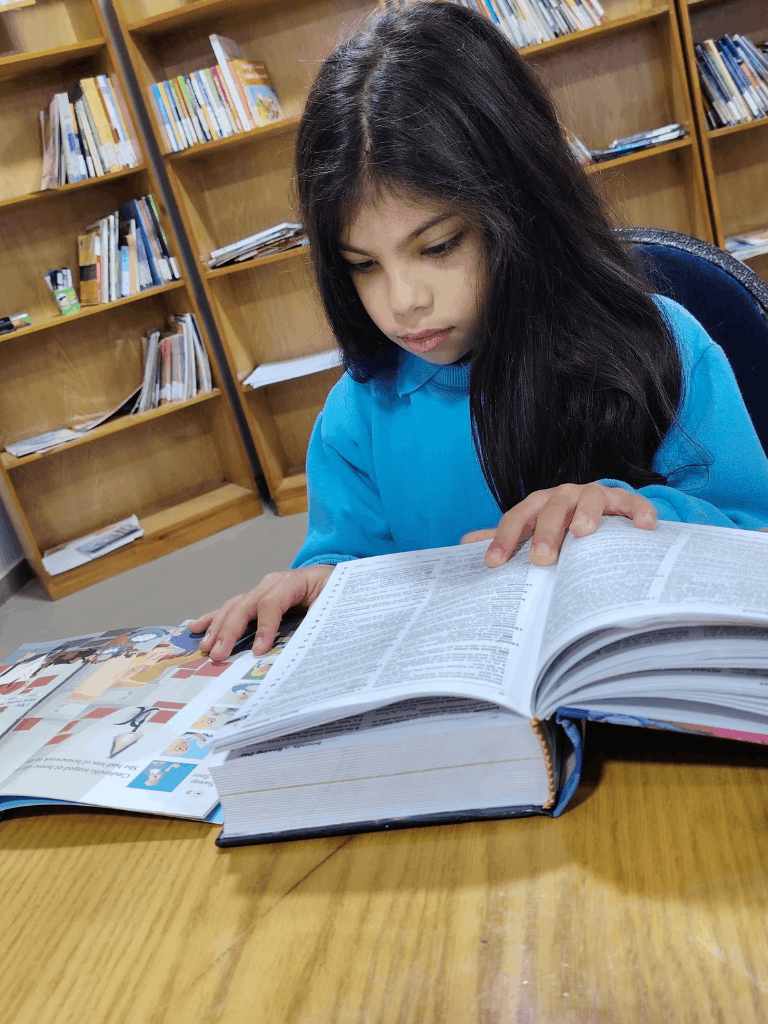
Reading is often described as a basic school skill, but decades of educational and cognitive research show that it is far more than that. Strong reading habits developed during the primary years are among the most powerful predictors of long-term academic success —across subjects, stages, and education systems. In Egypt, where students navigate dense curricula, high-stakes exams, and bilingual or multilingual learning environments, early reading habits play a decisive role in shaping academic achievement, thinking skills, and lifelong learning capacity. This article examines what longitudinal studies reveal about reading habits, explains why primary years are a critical window, and explores how schools and parents in Egypt can leverage reading to improve student outcomes.
1. Why the Primary Years Matter So Much A Critical Developmental Window Primary education (approximately ages 6–11) is a period when children:
Transition from learning to read to reading to learn
Develop foundational vocabulary and comprehension skills
Build attention span and sustained focus
Form attitudes toward learning that persist for years
Longitudinal studies—research that follows students over many years—consistently show that reading proficiency and habits established in primary school strongly predict academic performance in later stages, including preparatory, secondary, and even higher education. Once reading gaps appear and persist beyond the primary years, they become increasingly difficult to close.
2. What Longitudinal Studies Tell Us About Reading and Achievement Reading as a Predictor, Not Just a Result Large-scale longitudinal research across different countries has demonstrated that:
Children who read frequently in primary school achieve higher scores in:
Mathematics
Science
Social studies
Strong early readers are more likely to:
Complete secondary education
Transition successfully to academically demanding curricula
Show higher levels of motivation and self-regulation
Importantly, these findings hold even when controlling for socioeconomic background and initial ability, indicating that reading habits themselves play a causal role in academic success.
3. The Cognitive Science Behind Reading and Learning How Reading Shapes the Brain Reading is a cognitively demanding activity that activates:
Language processing networks
Working memory
Attention control systems
Executive functions (planning, monitoring, reasoning)
Regular reading strengthens these systems, making it easier for students to:
Understand complex instructions
Follow multi-step problems
Analyze questions in exams
Retain and retrieve information
This explains why students who read well often perform better even in non-language subjects.
Vocabulary Growth and Comprehension Vocabulary size is one of the strongest predictors of academic success. Reading:
Exposes children to richer language than everyday conversation
Builds academic vocabulary required for textbooks and exams
Improves comprehension across all subjects
In Egypt, where students often learn content in both Arabic and English, early reading habits are especially important for bilingual academic development.
4. Reading Habits vs. Reading Ability Why Habit Matters More Than Skill Alone Being able to read does not automatically mean a child reads. Longitudinal studies highlight a crucial distinction:
Reading ability refers to decoding and basic comprehension
Reading habit refers to frequency, enjoyment, and voluntary engagement with texts
Children who read regularly:
Improve faster, even if they start at a lower level
Develop stronger comprehension over time
Build confidence and autonomy as learners
This means schools should focus not only on teaching reading skills, but also on cultivating a reading culture.
5. Reading and Academic Performance in the Egyptian Context Common Challenges In many Egyptian schools, reading faces obstacles such as:
Heavy curriculum load leaving limited time for free reading
Emphasis on memorization over comprehension
Reading viewed mainly as a subject, not a tool for learning
Limited home reading routines
As a result, some students:
Can decode text but struggle to understand it
Avoid reading unless required
Depend heavily on tutoring rather than independent learning
Why Reading Is a Strategic Advantage in Egypt Students with strong reading habits are better equipped to:
Understand exam questions accurately
Interpret word problems in math and science
Study independently
Adapt to international or semi-international curricula
Manage increasing academic complexity in preparatory stages
Reading is not an extra skill—it is an academic multiplier.
6. Reading Habits and Long-Term Outcomes Academic Trajectory Longitudinal research shows that early readers are more likely to:
Maintain higher academic achievement across years
Show stronger writing and reasoning skills
Develop effective study strategies
Engage more deeply with learning materials
Reading builds cumulative advantage: the more students read, the more capable they become of learning independently.
Motivation and Lifelong Learning Students who enjoy reading are more likely to:
Show curiosity
Seek knowledge beyond textbooks
Develop critical thinking
Continue learning outside formal education
These traits are essential for success in higher education and modern careers.
7. The Role of Schools in Building Reading Habits Evidence-Based School Practices Schools that successfully promote reading habits typically:
Provide daily or weekly dedicated reading time
Maintain accessible and diverse libraries
Encourage reading for pleasure, not only assessment
Integrate reading across subjects
Model reading as a valued activity
Assessment practices also matter. When reading is associated only with exams, motivation declines. When reading is associated with exploration and discussion, engagement increases.
8. The Role of Parents in Supporting Reading Home Reading Makes a Difference Longitudinal evidence shows that parental involvement in reading—especially in primary years—has a lasting impact on academic success. Parents can support reading by:
Establishing daily reading routines
Reading aloud, even after children can read independently
Discussing stories and ideas
Providing access to age-appropriate books
Valuing reading over screen-based entertainment
These practices strengthen language, attention, and emotional connection to learning.
9. Reading in a Digital Age: Balance, Not Replacement While digital tools can support literacy, research indicates that:
Sustained reading of physical or long-form texts supports deeper comprehension
Excessive short-form digital content can reduce attention span
For Egyptian students, especially in primary years, balanced exposure is key:
Printed books for sustained reading
Digital tools for support and engagement
Clear boundaries around screen use
10. Building a Reading Culture for Academic Excellence To maximize academic success, reading must be positioned as:
A daily habit, not an occasional task
A source of enjoyment, not only obligation
A foundation for learning across subjects
When reading becomes part of school identity and home life, students gain an advantage that compounds year after year.
Conclusion: Reading Is the Foundation of Academic Success The evidence from longitudinal studies is clear: Children who develop strong reading habits in primary school are more likely to succeed academically throughout their educational journey. In Egypt’s education system—where academic demands intensify rapidly—reading:
Strengthens comprehension and reasoning
Supports success across all subjects
Reduces reliance on rote memorization
Builds confident, independent learners
Reading is not just preparation for exams. It is preparation for learning itself. The earlier the habit begins, the stronger the outcome.