Introduction Education in the 21st century is no longer defined by memorization, exams, or the ability to recall information. In a rapidly changing world driven by technology, globalization, and automation, students need a new set of skills to succeed academically, professionally, and socially. For Egypt’s education system—public, private, national, and international schools alike—the challenge is clear: How do we prepare students not just for exams, but for life and work in the modern world? Global education research provides strong evidence that developing 21st century skills within schools leads to better academic outcomes, stronger employability, and more adaptable, confident learners. This article explores what these skills are, what research recommends, and how Egyptian schools can realistically implement them.
What Are 21st Century Skills? 21st century skills refer to a group of competencies that enable students to think critically, collaborate effectively, communicate clearly, and adapt to continuous change. Core 21st century skill categories:
Critical thinking and problem-solving
Creativity and innovation
Communication skills
Collaboration and teamwork
Digital literacy
Self-direction and lifelong learning
Social and emotional intelligence
Global and cultural awareness
These skills complement academic knowledge—they do not replace it.
Why 21st Century Skills Matter for Egypt Egyptian students today will enter a labor market very different from the one their parents knew. Key realities:
Many future jobs do not yet exist
Automation and AI are reshaping traditional careers
Employers increasingly value skills over grades
Global competition requires adaptability and multilingual communication
Research shows that education systems focusing only on content coverage fail to prepare students for modern challenges.
Global Research Findings on Skill-Based Education Academic Performance Improves Contrary to common fears, international studies show that:
Students engaged in skill-based learning perform better academically
Project-based and inquiry-based learning strengthen understanding
Deep learning replaces surface memorization
Higher Student Engagement Skill-focused classrooms report:
Increased motivation and participation
Lower dropout rates
Better classroom behavior
This is especially relevant in Egypt, where disengagement often begins in preparatory and secondary stages.
Critical Thinking: The Foundation Skill Critical thinking enables students to analyze, evaluate, and apply information rather than simply repeat it. Research insights:
Students trained in critical thinking show stronger problem-solving abilities
They perform better in math, science, and language comprehension
They are more resilient during exams and assessments
Application in Egyptian classrooms:
Asking “why” and “how,” not just “what”
Using real-life problems connected to Egyptian society
Encouraging multiple solutions, not one correct answer
Communication Skills and Language Development Effective communication—oral, written, and digital—is a core predictor of future success. Benefits highlighted by research:
Stronger academic writing and reading comprehension
Improved confidence and presentation skills
Better teamwork and peer interaction
In Egypt’s multilingual context (Arabic, English, French, and others), communication skills are a strategic advantage.
Collaboration and Teamwork Modern workplaces rely on teamwork across cultures and disciplines. Educational research shows:
Collaborative learning improves understanding
Students retain information longer when learning together
Group work builds leadership and conflict-resolution skills
Classroom strategies:
Structured group projects
Peer learning and discussion circles
Role-based teamwork (leader, researcher, presenter)
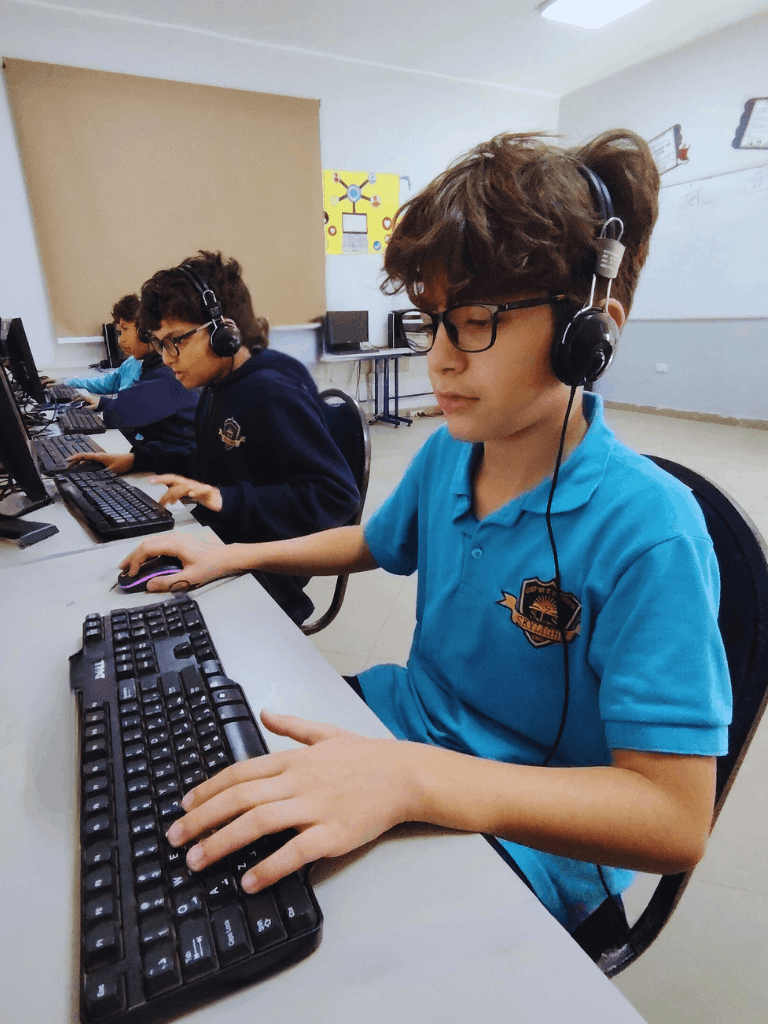
Digital Literacy: A Non-Negotiable Skill Digital literacy goes far beyond using devices. It includes:
Evaluating online information critically
Responsible use of technology
Understanding digital safety and ethics
Using technology for research, creation, and problem-solving
For Egyptian students growing up in a digital world, schools must teach digital thinking, not just digital tools.
Creativity and Innovation in Learning Creativity is no longer limited to art or music—it is essential in science, business, and technology. Research confirms:
Creative learning boosts motivation
It supports deeper understanding of academic concepts
It prepares students for innovation-driven careers
Creativity flourishes when students are allowed to explore, design, and experiment.
Social and Emotional Skills (SEL) Academic success is closely linked to emotional intelligence. Research findings:
Students with strong SEL skills perform better academically
Emotional regulation improves focus and exam performance
Positive relationships enhance learning environments
This is especially important in Egypt, where exam pressure and private tutoring culture increase student stress.
Challenges Facing Egyptian Schools Despite clear research, implementation faces obstacles:
Overloaded curricula
Exam-driven assessment systems
Large class sizes
Limited teacher training in modern pedagogy
However, global examples show that incremental change is effective.
Practical Strategies for Egyptian Schools Curriculum Design
Integrate skills into existing subjects
Focus on depth over speed
Connect lessons to real-world contexts
Teaching Methods
Project-based learning
Inquiry-based discussions
Problem-solving tasks
Assessment Reform
Use rubrics and performance-based assessment
Evaluate skills alongside content knowledge
Reduce overreliance on rote exams
Teacher Development
Continuous professional training
Coaching in active learning strategies
Encouraging reflective teaching practices
Role of Parents and the Community Skill development does not stop at school. Parents can:
Encourage curiosity and questioning
Support reading, discussion, and exploration
Value skills, not just grades
Community partnerships can:
Provide real-world learning opportunities
Connect education to local challenges and careers
Alignment with Egypt’s Vision for Education Developing 21st century skills aligns with:
Egypt Vision 2030
Digital transformation goals
Workforce readiness strategies
A skill-based education system supports national development and global competitiveness.
Conclusion Global education research sends a clear message: schools must evolve. Developing 21st century skills is not an optional reform—it is an educational necessity. For Egypt, the path forward lies in balanced education: strong academic foundations combined with critical thinking, communication, creativity, and digital competence. When schools embrace these principles, students do not just succeed in exams—they thrive in life.